'As live' productions are recorded programmes with a live feel
Usually studio location
Why As Live?
- less risky - more controllable, more polished
- can re record elements like intro and closing shots
- do not require the technical paraphernalia of live transmissions - less loss of transmissions
- cost reduced manpower /technology
- programme can hire quickly after recording and also retains the excitement and reality of live tv
Disadvantages:
- lose the edge of live production
- tension of live programme hard to recreate
- post production may make it feel too manufactured
- tempting to over shoot
- audience at home can feel cheated
As Live Formats
Panel shows
Quiz shows
Chat shows
Music
Entertainment / Comedy
Common themes:
Audience
Full studio floor crew
Screen guests / talent + main presenter / anchor
Often topical / driven by special events or dates
Often use VT inserts
Impact of Genre:
The expectation of the audience regarding the sort of experience they will be having from a particular genre will need to be considered.
Why have an audience? Why do they add to the viewing experience? Do we need them?
- Helps create excitement / energy / audience can react
Audience can take number of roles:
- Passive - simply quietly viewing - tension
- Participatory / active - taking part in some way - helps to add a connection
- Appreciative - responding through laughter, clapping etc.
- Supportive - there to offer support to a particular contributor
What role they play depends on the type of format you are producing - value judgements must be made as to their role.
As Live Content
It is limited by considerations such as:
- time
- location
- budget
- logistics
Timings
- it is absolutely essential that as lives consider timings - when discussing potential content this is a huge factor.
- a simple discussion around the viability of an idea in terms of timing could well determine whether it will be included in the programme or not
Live TV
Live has become its own genre
Immediacy
Sporting Events
National / International Celebrations
Ceremonial occasions
Case Study: Live Aid
- 3 July 1985 - Bob Geldof organised Live Aid
- Huge event staged simultaneously at Wembley London and JFK stadium Philadelphia.
Live and New media
Broadcasters now collaborate with their audience
e.g. Facebook Live
The Sound of Music Live
- Never been done before - unique
- Iconic
Even pre shot VT can experience problems live
Whether it is that the wrong VT is played or that the VT simply will not play
Live in a 'catch up' world
Does live still have a place in our schedules?
What is the impact of broadcasting live upon the viewing experience?
What practical issues present themselves when setting up a live?
What value is added?
Why do live shows pull such big audiences?

Tuesday, 16 January 2018

Monday, 15 January 2018
'AS LIVE' PRODUCTION: Developing the Pitch
Me and Mel met up a week before the pitch to discuss and refine our ideas.
We decided to break down the separate components in order to get a better idea of what we needed for the pitch.
THE IDEA
A fashion chat show exploring anti-mainstream fashion.
Looking at the things that often get overlooked by mainstream media.
Different segments focused on different areas of fashion.
Something for men and women of all ages.
WORKING TITLE
Steal The Style
The Anti Fashion Chat Show
PITCH
A fashion chat show exploring the antidote to the mainstream played out fashion trends. Targeted towards normal working men and women with average budgets.
The pitch broken down: The show is the cure to the over done trends which are often featured in the media. The show aims to feature different, unique trends (or at least different / unique ways of styling the popular trends). We wanted to target our show towards 'normal', average, everyday people - this is because trends that are usually shown on TV are the ones celebrities or reality stars may wear and this is not usually relatable for the average person. We wanted to aim the show at working men and women as this gives an indicator of the age and budget of the audience. 'Working' suggests someone aged 16-50 and slightly older - most working people also have to budget so that they can live within their means - therefore we wanted to show how people can still look good and stay on trend without spending a lot of money.
FORMAT
4 different segments.
Each segment has an accompanying VT.
The VT sets out to explore the areas which cannot be done in the studio environment.
The look of the show has to be appropriate for both a male and female audience - this means our branding cannot be too pink and girly. Neutral or unisex colours need to be used i.e. creams, oranges, reds etc. The target audience also affects the delivery of the content - from my research into fashion magazines I found that the delivery of the content in the male and female magazines was slightly different. The magazines targeted towards females were more in depth and gave a lot more context to the fashion and why items were styled in a particular way, whereas the male magazine had a much more direct delivery and just outlined the trends. Our show will have to consider this with the delivery of our content.
Section One: Trends of the Week
- How to follow the current trends by styling them differently
- People want to be on trend and stylish but also want to stand out from the crowd - the presenters will discuss how the audience can do this
- Can introduce a guest / reporter to discuss the trends
VT:
- Reporter going to different stores to show where stocks the trends for the best price.
- Piecing together outfits from the current trends.
Back to the studio - audience rates the trends of the week as 'hot' or 'not' on a Top Gear Cool Wall style board.
Section Two: Microbrands / Independent Stores
- Looking into independent stores
- Interviewing an owner of an independent store (topics could include: why they started the business, what they sell for what price, what they can offer that big chains can't, where they get their ideas for designs etc.)
VT:
- Visiting the guest's store - GVs and narration. Backing up what has been said in the studio.
- Potentially interviewing the store's customers - asking why they shop there and whether they prefer buying from independent stores of from big high street stores.
Originally, we wanted to include a section about fast fashion to compare this to the independent 'slow fashion' stores. However, we decided that this could be worked into the independent stores section by adding a segment that compares the independent stores to the big high street names.
Section Three: Very Vintage
- Presenters discuss vintage markets and their rising popularity
- Provide tips on how to find the best pieces for the best price - 5 tips?
VT:
- Following the presenters around a vintage market
- Build an outfit following the advice they provided in the studio
Section Four: Digging Through The Wardrobe Of...
- Bring in a guest to talk about the unique aspects of their wardrobe e.g. a small fashion blogger / local celebrity
- Interview them about what sort of different items they look to have in their wardrobe
- Bring one item from the VT and give style advice surrounding it
- Each week could feature a different guest
VT:
- The VT will show the presenter and guest looking through their wardrobe.
- Different items will be pulled out and talked about. This will cover the oldest item, things that have been handed down, favourite piece and things they can’t bear to throw out.
After each section, the studio audience will rate whether they think the topic is 'hot or not'. This acts like the 'Cool Wall' does in Top Gear. This allows the audience to interact with the show and share their opinion on the trends and topics covered.
CHANNEL / BROADCASTER
In order to determine which channel our show would be most suited on, myself and Melissa did some research into the popular lifestyle channels.
ITV
ITV is a potential candidate to host our show as "ITV broadcasts a wide variety of content". [1] This wide variety allows room for our fashion based chat show. The audience demographic of ITV is also similar to the audience we are targeting our show towards; "Our free-to-air digital channels provide more targeted demographics for advertisers, such as 16–34s, ABC1s, Men and Housewives with Children, and consist of ITV2 and ITV3, the two largest digital channels in the UK, ITV4, CITV and ITVBe." [1] Although ITV does broadcast a wide variety of content, the main channel does not feature many lifestyle programmes, instead the programmes are "drama, entertainment and factual entertainment." [1] Therefore, our show would fit better on a different channel.
We decided to break down the separate components in order to get a better idea of what we needed for the pitch.
THE IDEA
A fashion chat show exploring anti-mainstream fashion.
Looking at the things that often get overlooked by mainstream media.
Different segments focused on different areas of fashion.
Something for men and women of all ages.
WORKING TITLE
Steal The Style
The Anti Fashion Chat Show
PITCH
A fashion chat show exploring the antidote to the mainstream played out fashion trends. Targeted towards normal working men and women with average budgets.
The pitch broken down: The show is the cure to the over done trends which are often featured in the media. The show aims to feature different, unique trends (or at least different / unique ways of styling the popular trends). We wanted to target our show towards 'normal', average, everyday people - this is because trends that are usually shown on TV are the ones celebrities or reality stars may wear and this is not usually relatable for the average person. We wanted to aim the show at working men and women as this gives an indicator of the age and budget of the audience. 'Working' suggests someone aged 16-50 and slightly older - most working people also have to budget so that they can live within their means - therefore we wanted to show how people can still look good and stay on trend without spending a lot of money.
FORMAT
4 different segments.
Each segment has an accompanying VT.
The VT sets out to explore the areas which cannot be done in the studio environment.
The look of the show has to be appropriate for both a male and female audience - this means our branding cannot be too pink and girly. Neutral or unisex colours need to be used i.e. creams, oranges, reds etc. The target audience also affects the delivery of the content - from my research into fashion magazines I found that the delivery of the content in the male and female magazines was slightly different. The magazines targeted towards females were more in depth and gave a lot more context to the fashion and why items were styled in a particular way, whereas the male magazine had a much more direct delivery and just outlined the trends. Our show will have to consider this with the delivery of our content.
Section One: Trends of the Week
- How to follow the current trends by styling them differently
- People want to be on trend and stylish but also want to stand out from the crowd - the presenters will discuss how the audience can do this
- Can introduce a guest / reporter to discuss the trends
VT:
- Reporter going to different stores to show where stocks the trends for the best price.
- Piecing together outfits from the current trends.
Back to the studio - audience rates the trends of the week as 'hot' or 'not' on a Top Gear Cool Wall style board.
Section Two: Microbrands / Independent Stores
- Looking into independent stores
- Interviewing an owner of an independent store (topics could include: why they started the business, what they sell for what price, what they can offer that big chains can't, where they get their ideas for designs etc.)
VT:
- Visiting the guest's store - GVs and narration. Backing up what has been said in the studio.
- Potentially interviewing the store's customers - asking why they shop there and whether they prefer buying from independent stores of from big high street stores.
Originally, we wanted to include a section about fast fashion to compare this to the independent 'slow fashion' stores. However, we decided that this could be worked into the independent stores section by adding a segment that compares the independent stores to the big high street names.
Section Three: Very Vintage
- Presenters discuss vintage markets and their rising popularity
- Provide tips on how to find the best pieces for the best price - 5 tips?
VT:
- Following the presenters around a vintage market
- Build an outfit following the advice they provided in the studio
Section Four: Digging Through The Wardrobe Of...
- Bring in a guest to talk about the unique aspects of their wardrobe e.g. a small fashion blogger / local celebrity
- Interview them about what sort of different items they look to have in their wardrobe
- Bring one item from the VT and give style advice surrounding it
- Each week could feature a different guest
VT:
- The VT will show the presenter and guest looking through their wardrobe.
- Different items will be pulled out and talked about. This will cover the oldest item, things that have been handed down, favourite piece and things they can’t bear to throw out.
After each section, the studio audience will rate whether they think the topic is 'hot or not'. This acts like the 'Cool Wall' does in Top Gear. This allows the audience to interact with the show and share their opinion on the trends and topics covered.
CHANNEL / BROADCASTER
In order to determine which channel our show would be most suited on, myself and Melissa did some research into the popular lifestyle channels.
ITV
ITV is a potential candidate to host our show as "ITV broadcasts a wide variety of content". [1] This wide variety allows room for our fashion based chat show. The audience demographic of ITV is also similar to the audience we are targeting our show towards; "Our free-to-air digital channels provide more targeted demographics for advertisers, such as 16–34s, ABC1s, Men and Housewives with Children, and consist of ITV2 and ITV3, the two largest digital channels in the UK, ITV4, CITV and ITVBe." [1] Although ITV does broadcast a wide variety of content, the main channel does not feature many lifestyle programmes, instead the programmes are "drama, entertainment and factual entertainment." [1] Therefore, our show would fit better on a different channel.
ITVBe
Whilst ITV may not be a suitable host for our fashion chat show, ITVBe (ITV's lifestyle and reality orientated channel) may be more suitable. "ITVBe is the newest ITV channel to the family and our first free-to-air channel launch in over a decade. Featuring real lives and real people, ITVBe is home to the very best lifestyle and reality programming that the UK and US have to offer. Aimed at women and specifically young mums, the channel appeals to a dynamic and modern audience who are incredibly active on social media, with ITVBe’s content playing a huge part in their conversations across Facebook, Twitter and Instagram. " [2] Like our fashion chat show, ITVBe aim to show "real lives and real people" which would make it a good contender to broadcast the show. However, the issue with this channel is that it is mainly targeted towards women. We wanted our chat show to be targeted towards both men and women.
Channel 4
E4
We did discuss potentially choosing E4 as our broadcaster, however, this tends to show more teen / young adult content - this would exclude the older portion of our target audience. Like Channel 4 E4 is popular with a range of our target audience; "E4 is more talked about amongst 16-34’s than ITV1 (Hall & Partner research 2010)" [3], however, our show fits better with the Channel 4 demographic.
Really
Another potential broadcaster was Really - a lifestyle and reality channel. This appealed to us as the channel targets a "broad audience of 25-44 year old adults". [5] This caters for a lot of our target audiences (but excludes the younger and older end of our target).
TARGET AUDIENCE
Men and women.
All ages.
Inclusive show that caters for everyone's needs.
Therefore, for our presenters we have decided we will need a relatable and bubbly presenter so that the audience can connect with the fashion advice, but we will also need a fashion expert figure who can be seen as the voice of authority and who the audience will trust. We see them being similar to Gok Wan and Georgia Toffolo.


Example of Gok Wan: https://www.youtube.com/watch?v=Iatj9TRwzbw
Example of Georgia Toffolo: https://www.youtube.com/watch?v=OVFysYOmxnQ
SCHEDULE
Weekday after work - need to allow for people to travel home from their typical 9-5 job.
Wednesdays at 7pm - after the news
TECHNICAL ELEMENTS
Cameras:
4 cameras; 1 for presenters, 1 for guests, 1 master shot, 1 jib shot.
Lighting:
Key light and backlight for the presenters and for the guests.
Running order:

Sources:
[1] http://www.itvplc.com/about/what-we-do
[2] https://www.itvmedia.co.uk/channels/itv-be
[3] https://www.google.co.uk/url?sa=t&rct=j&q=&esrc=s&source=web&cd=1&ved=0ahUKEwjBoYjWlt3ZAhVQF8AKHVodCSoQFggpMAA&url=http%3A%2F%2Fwww.channel4.com%2Fmedia%2Fdocuments%2Fcommissioning%2FRESEARCH%2FResearchPowerPoint.ppt&usg=AOvVaw0Ruc8C5vIgUn1gd8gBzJSX
[4] http://www.channel4.com/programmes/categories
[5] https://corporate.uktv.co.uk/news/article/really-new-brand-identity/
Whilst ITV may not be a suitable host for our fashion chat show, ITVBe (ITV's lifestyle and reality orientated channel) may be more suitable. "ITVBe is the newest ITV channel to the family and our first free-to-air channel launch in over a decade. Featuring real lives and real people, ITVBe is home to the very best lifestyle and reality programming that the UK and US have to offer. Aimed at women and specifically young mums, the channel appeals to a dynamic and modern audience who are incredibly active on social media, with ITVBe’s content playing a huge part in their conversations across Facebook, Twitter and Instagram. " [2] Like our fashion chat show, ITVBe aim to show "real lives and real people" which would make it a good contender to broadcast the show. However, the issue with this channel is that it is mainly targeted towards women. We wanted our chat show to be targeted towards both men and women.
Channel 4
Channel 4 is possibly the most suitable channel for our programme. Having broadcast programmes such as God Wan's 'How To Look Good Naked', we know our programme fits with the type of content Channel 4 put out. Channel 4 also popular amongst a wide range of our target audience; "Channel 4 is the most talked about commercial TV channel for 16-34s (TGI 2009)" [3] Although this doesn't cater for the older section of our target audience, it still shows that a large proportion of our target audience are interested in this channel. Channel 4 also has a wide range of programmes such as: Comedy, Drama, World Drama, Entertainment, Factual, Lifestyle, Sport [4]. This makes Channel 4 the most suitable channel for our show.
E4
Really
Another potential broadcaster was Really - a lifestyle and reality channel. This appealed to us as the channel targets a "broad audience of 25-44 year old adults". [5] This caters for a lot of our target audiences (but excludes the younger and older end of our target).
TARGET AUDIENCE
Men and women.
All ages.
Inclusive show that caters for everyone's needs.
Therefore, for our presenters we have decided we will need a relatable and bubbly presenter so that the audience can connect with the fashion advice, but we will also need a fashion expert figure who can be seen as the voice of authority and who the audience will trust. We see them being similar to Gok Wan and Georgia Toffolo.


Example of Gok Wan: https://www.youtube.com/watch?v=Iatj9TRwzbw
Example of Georgia Toffolo: https://www.youtube.com/watch?v=OVFysYOmxnQ
SCHEDULE
Weekday after work - need to allow for people to travel home from their typical 9-5 job.
Wednesdays at 7pm - after the news
TECHNICAL ELEMENTS
Cameras:
4 cameras; 1 for presenters, 1 for guests, 1 master shot, 1 jib shot.
Lighting:
Key light and backlight for the presenters and for the guests.
Running order:

Sources:
[1] http://www.itvplc.com/about/what-we-do
[2] https://www.itvmedia.co.uk/channels/itv-be
[3] https://www.google.co.uk/url?sa=t&rct=j&q=&esrc=s&source=web&cd=1&ved=0ahUKEwjBoYjWlt3ZAhVQF8AKHVodCSoQFggpMAA&url=http%3A%2F%2Fwww.channel4.com%2Fmedia%2Fdocuments%2Fcommissioning%2FRESEARCH%2FResearchPowerPoint.ppt&usg=AOvVaw0Ruc8C5vIgUn1gd8gBzJSX
[4] http://www.channel4.com/programmes/categories
[5] https://corporate.uktv.co.uk/news/article/really-new-brand-identity/
Sunday, 14 January 2018
'AS LIVE' PRODUCTION: (Research) Fashion TV Shows
Currently, there are not a lot of fashion shows on TV - this shows the perfect opening in the market for a fashion chat show. Shows like Lorraine and This Morning feature fashion segments on their programmes but there is a lot of room for this topic to be further explored.
This Morning
Due to the lack of current fashion TV shows, I decided to look into the fashion segment on This Morning. The fashion segment is very brief and always follows the same structure. The fashion segment focuses on a trend and suggests ways to style it whilst showing the trend on a model. A fashion expert (Trinny) is brought in to talk about the trend - this gives the advice some credibility as it is coming from someone experienced in fashion.

The segment takes a conversational tone between the presenters and Trinny the fashion expert - this makes the trend more relatable to the audience. To prevent the fashion advice being too overwhelming, graphics on screen help to display some of the information so that the audience aren't trying to take in too much at once.
As well as showing how to style the trend, Trinny gives reasons as to why e.g. the white camisole underneath this sheer top has a deep V at the back to emphasise the sheer fabric of the top.
The presenters and Trinny ask the model for her opinion on the clothing items - making the segment relatable to the audience as they can relate with the model and her opinion on the outfit.
How this can be used to inform the development of our show
- For our 'Trends of the Week' segment, suggest ways the audience can wear the trend as well as justifying this style advice.
- The advice should come from a fashion expert figure so that the audience trust the advice being given to them
Gok Wan's How To Look Good Naked
Even though this is not on TV anymore, it was broadcast on Channel 4 which is the channel we could be aiming for with our programme so it is interesting to see what style advice is given.

The show focuses on getting women to feel comfortable in their bodies without resorting to plastic surgery or losing weight. This comes from providing the guests with style advice to suit their body types and to flatter their figures - like with Trinny on This Morning, Gok is considered a fashion expert and therefore the audience will take advice from him as they trust his opinion.
This programme is now quite outdated and therefore so is the fashion advice - this again demonstrates that there is a gap in the market for contemporary fashion advice. The fashion advice will still inform the audience how they can dress on trend and dress for their body type but using newer fashion trends.
How this can be used to inform the development of our show
- As well as showing trends, it should be suggested how these will suit different figures - should consider having models of different sizes to demonstrate the trends
- People trust Gok's fashion expertise - we will need to establish one presenter as a fashion expert so that our audience trust them
- The delivery style of this programme can be used to inform the delivery style of our programme. The show always leads up to a big reveal at the end demonstrating the guest's transformation - we should consider having some sort of style reveal at the end of our show.
This Morning
Due to the lack of current fashion TV shows, I decided to look into the fashion segment on This Morning. The fashion segment is very brief and always follows the same structure. The fashion segment focuses on a trend and suggests ways to style it whilst showing the trend on a model. A fashion expert (Trinny) is brought in to talk about the trend - this gives the advice some credibility as it is coming from someone experienced in fashion.

The segment takes a conversational tone between the presenters and Trinny the fashion expert - this makes the trend more relatable to the audience. To prevent the fashion advice being too overwhelming, graphics on screen help to display some of the information so that the audience aren't trying to take in too much at once.
As well as showing how to style the trend, Trinny gives reasons as to why e.g. the white camisole underneath this sheer top has a deep V at the back to emphasise the sheer fabric of the top.
The presenters and Trinny ask the model for her opinion on the clothing items - making the segment relatable to the audience as they can relate with the model and her opinion on the outfit.
How this can be used to inform the development of our show
- For our 'Trends of the Week' segment, suggest ways the audience can wear the trend as well as justifying this style advice.
- The advice should come from a fashion expert figure so that the audience trust the advice being given to them
Gok Wan's How To Look Good Naked
Even though this is not on TV anymore, it was broadcast on Channel 4 which is the channel we could be aiming for with our programme so it is interesting to see what style advice is given.

The show focuses on getting women to feel comfortable in their bodies without resorting to plastic surgery or losing weight. This comes from providing the guests with style advice to suit their body types and to flatter their figures - like with Trinny on This Morning, Gok is considered a fashion expert and therefore the audience will take advice from him as they trust his opinion.
This programme is now quite outdated and therefore so is the fashion advice - this again demonstrates that there is a gap in the market for contemporary fashion advice. The fashion advice will still inform the audience how they can dress on trend and dress for their body type but using newer fashion trends.
How this can be used to inform the development of our show
- As well as showing trends, it should be suggested how these will suit different figures - should consider having models of different sizes to demonstrate the trends
- People trust Gok's fashion expertise - we will need to establish one presenter as a fashion expert so that our audience trust them
- The delivery style of this programme can be used to inform the delivery style of our programme. The show always leads up to a big reveal at the end demonstrating the guest's transformation - we should consider having some sort of style reveal at the end of our show.
Friday, 12 January 2018
'AS LIVE' PRODUCTION: (Research) Fashion Magazines
Following the 1-2-1 feedback session with Helen, I decided to do some research into fashion magazines.
Magazine Research
I already had a collection of magazines; 2 Company Magazines, a Topshop magazine and several NME magazines. I also picked up Vogue, Cosmopolitan and a fashion book written by Stephen Jones.
I wanted to have a look at a wide range of magazines as they all have slightly different target audiences. As our aim to produce a show targeted towards everyone - we need to know what older and younger people want to see.
I decided to focus on Vogue, Company and Esquire as these cover a lot of the potential target audience for our show.
Vogue Magazine is targeted towards 20-40 year olds with 34% of its readers falling into the 25-34 year old age bracket. The majority of the readers are women (77%) and are also of high or above average income (74%). [1]
Company Magazine is targeted towards 16-24 year old females. [2]
Esquire Magazine is targeted towards 25-45 year old males. [3]


Vogue also included a Vogue trends section where they explore some trends in more depth. I liked the idea of their 'the joy of socks' section - this gave me the idea of potentially having a 'forgotten fashion' section where the presenters discuss and display some aspects of fashion which people often forget about. E.g. they can talk about how different patterned socks could compliment an outfit and how to style them.

Vogue also included a Vogue darlings section - this is where they interview one specific person. We could use this in one of our segments - pick an interesting person and ask them about their fashion and what makes them wear what they do - what are their influences? Where do they buy their clothes? What style advice would they have for someone? Vogue also had a jewellery, living, travel and an arts and culture section - showing that they cover more than just fashion.
Company Magazine has a much more 'scrap book' sort of feel - things are scattered over the page. Included in the magazine is a section called 'fashion five' where 5 fashionable trends / experiences are listed. Number 5 for this issue was Vintage shopping in New York. It displays what vintage things can be bought and where from. This inspired the idea of having a vintage section in our show called 'Very Vintage' - the presenters could give their tips to finding on trend pieces in a vintage market - and then the VT could be a challenge between the presenters to find an outfit for each other in the vintage market using the tips they just provided.

Company also has a section called bloggers wear the trends. This goes through the fashion of different bloggers and picks apart what they wear and where the reader can buy similar items to piece together the look. We could use this in our show by taking celebrities outfits, picking them apart and then showing the audience where they can get the look at high street prices.

Both Vogue and Company magazine were made up of trend sections, style advice, picking apart outfits, interviews, places to shop and other non fashion sections. Their formats differed in the sense that Vogue was more structured whilst Company had a more informal layout - however, they both covered similar topics in a similar order. They both looked at fashion and then moved into other areas such as makeup, jewellery and lifestyle. They start with their most popular / most important section - therefore we should do something similar with our show.
I also decided to look at Esquire magazine as this is targeted towards men. I wanted to see what fashion they featured but also how they delivered the information to appeal to men.

I found that with Esquire the information was much more to the point. In Vogue and Company, more context was given to the outfits featured i.e. they explained why things were in trend and why the pieces would be styled the way they were. However, in Esquire the trend is not explained in much depth - the trends are listed and then the reader is told where they can buy the pieces. As our show is targeted towards both males and females, we need to find a way to deliver the information so that both can relate to the information. This may mean being a bit more direct with the styling advice for the females and a bit more in depth for the male audience so that the information balances out.

Other articles featured in the magazine include:
- The 4 Coats Every Man Needs In His Winter Wardrobe
- 6 Ways To Pimp Your G&T
- How To Switch Up Your Watch Game For Each Occassion
- 6 Pieces Of Tech That Will Make You Spend More Time In Your Kitchen
This displays how this magazine also focuses on much more than fashion - it may be a good idea for our show to include little bits of advice about other areas such as lifestyle / homeware. Esquire's articles about watches also fits with my 'forgotten fashion' idea where the presenters can talk about these little accessories and how they can make a big difference to the outfit.
Looking into these magazines has been very useful. I have been able to establish their tone, style, how they deliver the content so that it is appropriate for their target audience and what sort of topics they cover. This has given me ideas for our show such as:
- trends of the week
- forgotten fashion
- very vintage
- an interview section
- blogger / celebrity trends
I will now look into existing fashion TV programmes to establish how they deliver their content and also what their content includes.
Sources:
[1] https://www.condenast.ru/en/portfolio/magazines/vogue/circulation/
[2] http://www.thedrum.com/news/2014/08/14/company-magazine-go-online-only-support-desires-its-target-audience
[3] http://www.hearst.co.uk/brands/esquire
Magazine Research
I already had a collection of magazines; 2 Company Magazines, a Topshop magazine and several NME magazines. I also picked up Vogue, Cosmopolitan and a fashion book written by Stephen Jones.
I wanted to have a look at a wide range of magazines as they all have slightly different target audiences. As our aim to produce a show targeted towards everyone - we need to know what older and younger people want to see.
I decided to focus on Vogue, Company and Esquire as these cover a lot of the potential target audience for our show.
Vogue Magazine is targeted towards 20-40 year olds with 34% of its readers falling into the 25-34 year old age bracket. The majority of the readers are women (77%) and are also of high or above average income (74%). [1]
Company Magazine is targeted towards 16-24 year old females. [2]
Esquire Magazine is targeted towards 25-45 year old males. [3]

In order to see what sort of format the magazines delivered the content in, I decided to have a look at the contents pages. Each magazine was split into sections - many of the magazines covered a variety of topics e.g. fashion, makeup, lifestyle, homeware etc. I want our show to be more focused towards fashion, however, the variety in the magazines shows that we definitely need a variety of topics within fashion if the audience is to stay interested. It may be a good idea to bring in other areas of style when they compliment the fashion being displayed (such as makeup) to keep the content interesting. If we do a current trends section we can include current makeup trends with the current fashion trends.

I then had a look through the sections and pulled out ideas that we could potentially use as a segment in our show. Vogue included some behind the scenes of the issue - I thought we could include something like this in the promo material for the show or as something that could be played whilst the credits are rolling. This allows complete transparency as the audience are able to see how the show was made - this may also lead to a more trusting audience as it shows that there is nothing to hide - this is key to our show as we need the audience to trust the style advice we are providing them with. Vogue also has a 'checklist for the new season' section. This outlines the new trends coming in and how to build them into your wardrobe. This gave me the idea of have a 'trends of the week' section in our show. We could take the current trends that have been introduced in the season and discuss the different ways they can be styled. The presenters could then ask the audience whether they have worn any of the trends / whether they would like to buy any of these trends - this allows for some audience participation. I then had the idea that there could be a VT for this section - a reporter could go around the stores currently stocking the trends and show the audience where they can buy these trends for the best price. When it cuts back to the studio, the audience could then rate the trend 'hot' or 'not' on a Top Gear cool wall style board - this again allows for audience participation.

Vogue also included a Vogue trends section where they explore some trends in more depth. I liked the idea of their 'the joy of socks' section - this gave me the idea of potentially having a 'forgotten fashion' section where the presenters discuss and display some aspects of fashion which people often forget about. E.g. they can talk about how different patterned socks could compliment an outfit and how to style them.

Vogue also included a Vogue darlings section - this is where they interview one specific person. We could use this in one of our segments - pick an interesting person and ask them about their fashion and what makes them wear what they do - what are their influences? Where do they buy their clothes? What style advice would they have for someone? Vogue also had a jewellery, living, travel and an arts and culture section - showing that they cover more than just fashion.
Company Magazine has a much more 'scrap book' sort of feel - things are scattered over the page. Included in the magazine is a section called 'fashion five' where 5 fashionable trends / experiences are listed. Number 5 for this issue was Vintage shopping in New York. It displays what vintage things can be bought and where from. This inspired the idea of having a vintage section in our show called 'Very Vintage' - the presenters could give their tips to finding on trend pieces in a vintage market - and then the VT could be a challenge between the presenters to find an outfit for each other in the vintage market using the tips they just provided.

Company also has a section called bloggers wear the trends. This goes through the fashion of different bloggers and picks apart what they wear and where the reader can buy similar items to piece together the look. We could use this in our show by taking celebrities outfits, picking them apart and then showing the audience where they can get the look at high street prices.

Both Vogue and Company magazine were made up of trend sections, style advice, picking apart outfits, interviews, places to shop and other non fashion sections. Their formats differed in the sense that Vogue was more structured whilst Company had a more informal layout - however, they both covered similar topics in a similar order. They both looked at fashion and then moved into other areas such as makeup, jewellery and lifestyle. They start with their most popular / most important section - therefore we should do something similar with our show.
I also decided to look at Esquire magazine as this is targeted towards men. I wanted to see what fashion they featured but also how they delivered the information to appeal to men.

I found that with Esquire the information was much more to the point. In Vogue and Company, more context was given to the outfits featured i.e. they explained why things were in trend and why the pieces would be styled the way they were. However, in Esquire the trend is not explained in much depth - the trends are listed and then the reader is told where they can buy the pieces. As our show is targeted towards both males and females, we need to find a way to deliver the information so that both can relate to the information. This may mean being a bit more direct with the styling advice for the females and a bit more in depth for the male audience so that the information balances out.

Other articles featured in the magazine include:
- The 4 Coats Every Man Needs In His Winter Wardrobe
- 6 Ways To Pimp Your G&T
- How To Switch Up Your Watch Game For Each Occassion
- 6 Pieces Of Tech That Will Make You Spend More Time In Your Kitchen
This displays how this magazine also focuses on much more than fashion - it may be a good idea for our show to include little bits of advice about other areas such as lifestyle / homeware. Esquire's articles about watches also fits with my 'forgotten fashion' idea where the presenters can talk about these little accessories and how they can make a big difference to the outfit.
Looking into these magazines has been very useful. I have been able to establish their tone, style, how they deliver the content so that it is appropriate for their target audience and what sort of topics they cover. This has given me ideas for our show such as:
- trends of the week
- forgotten fashion
- very vintage
- an interview section
- blogger / celebrity trends
I will now look into existing fashion TV programmes to establish how they deliver their content and also what their content includes.
Sources:
[1] https://www.condenast.ru/en/portfolio/magazines/vogue/circulation/
[2] http://www.thedrum.com/news/2014/08/14/company-magazine-go-online-only-support-desires-its-target-audience
[3] http://www.hearst.co.uk/brands/esquire
Thursday, 11 January 2018
'AS LIVE' PRODUCTION: Feedback with Helen (1-2-1 Ideas Support)
After deciding to go with the Style Swap / Fashion based show, we discussed our options with Helen.
We still didn't know what sort of angle we wanted to go for, we knew that we wanted to do some sort of style swap element but also cover other topics in fashion.
Ideas we had during our discussion:
- Fashion show that showcases style that is opposite to the mainstream - opposite to the Kardashians / big celebs
- Average people showing themselves as they are - fashion for the normal person
- What type of audience? If audience age range is big then need to cater for them with the content. Different segments could be targeted towards different ages.
- Interviewing someone in fashion / makeup industry
- Fashion faux pars
- Looking at non high street brands - micro brands - independent stores
- Looking through someone of interest's wardrobe - why do people hold on to certain things?
- What trends are new? Hygge, cosy trends. In 2004 expensive designer goods were a trend - what's the next biggest thing?
- Looking at fashion that is 'too cheap' e.g. Primark - is it damaging to the fashion industry and the planet?
- Need good characters - stories
Research to be done into the topic:
- Read fashion magazines - what trends are they displaying? What format do they deliver the content in? What is their style / tone?
- How do designers come up with what they're doing? How do they decide which fabric will be the next trend? Fashion shows - colours etc.
- What has not been done? What is the next big thing? Why does this show need to exist?
- Why did the clothes show end? Why hasn't it come back? Is there a demand for this style of show?
- What are we offering that other shows / youtube videos aren't offering?
- What VTs will there be? What will their format be?
We still didn't know what sort of angle we wanted to go for, we knew that we wanted to do some sort of style swap element but also cover other topics in fashion.
Ideas we had during our discussion:
- Fashion show that showcases style that is opposite to the mainstream - opposite to the Kardashians / big celebs
- Average people showing themselves as they are - fashion for the normal person
- What type of audience? If audience age range is big then need to cater for them with the content. Different segments could be targeted towards different ages.
- Interviewing someone in fashion / makeup industry
- Fashion faux pars
- Looking at non high street brands - micro brands - independent stores
- Looking through someone of interest's wardrobe - why do people hold on to certain things?
- What trends are new? Hygge, cosy trends. In 2004 expensive designer goods were a trend - what's the next biggest thing?
- Looking at fashion that is 'too cheap' e.g. Primark - is it damaging to the fashion industry and the planet?
- Need good characters - stories
Research to be done into the topic:
- Read fashion magazines - what trends are they displaying? What format do they deliver the content in? What is their style / tone?
- How do designers come up with what they're doing? How do they decide which fabric will be the next trend? Fashion shows - colours etc.
- What has not been done? What is the next big thing? Why does this show need to exist?
- Why did the clothes show end? Why hasn't it come back? Is there a demand for this style of show?
- What are we offering that other shows / youtube videos aren't offering?
- What VTs will there be? What will their format be?
Tuesday, 9 January 2018
'AS LIVE' PRODUCTION: (Lecture) Briefing
Learnt from last term:
Communication - keeping actors on board throughout the project. Stayed in contact with my actress from directions unit and used her again for fiction.
Manage time in the edit better - there were aspects of the sound design that I would have liked to improve but didn't have time.
Schedule time better - only had a few hours with actress but was tight for time so had to shoot that day.
Get better at team work - shot all my project myself, could have done with an extra crew member.
Briefing:
Aims:
- A1 to promote knowledge and critical understanding of As Live studio productions
- A2 to enable development of a creative methodology for the production of As Live studio productions including research and critical analysis
- A3 to enable development of the creative, technical and collaborative skills necessary in the realisation of As Live studio productions.
- A4 to widen students’ oral presentation and pitching skills within a commissioning panel context
Outcomes:
- LO1 demonstrate critical and creative knowledge and understanding of As Live studio production
- LO2 develop innovative concepts and a creative methodology for a studio production format
- LO3 implement a range of practical, creative and collaborative skills required for studio production
- LO4 develop, prepare and present a detailed pitch to a commissioning panel
23rd Jan - pitching session
25th Jan - job interviews
Studio content and production teams:
- all content for the commissioned programme will be discussed within the group through meetings
Assessment:
30% Production role critical analysis (2000 words)
70% Project output
Communication - keeping actors on board throughout the project. Stayed in contact with my actress from directions unit and used her again for fiction.
Manage time in the edit better - there were aspects of the sound design that I would have liked to improve but didn't have time.
Schedule time better - only had a few hours with actress but was tight for time so had to shoot that day.
Get better at team work - shot all my project myself, could have done with an extra crew member.
Briefing:
Aims:
- A1 to promote knowledge and critical understanding of As Live studio productions
- A2 to enable development of a creative methodology for the production of As Live studio productions including research and critical analysis
- A3 to enable development of the creative, technical and collaborative skills necessary in the realisation of As Live studio productions.
- A4 to widen students’ oral presentation and pitching skills within a commissioning panel context
Outcomes:
- LO1 demonstrate critical and creative knowledge and understanding of As Live studio production
- LO2 develop innovative concepts and a creative methodology for a studio production format
- LO3 implement a range of practical, creative and collaborative skills required for studio production
- LO4 develop, prepare and present a detailed pitch to a commissioning panel
23rd Jan - pitching session
25th Jan - job interviews
Studio content and production teams:
- all content for the commissioned programme will be discussed within the group through meetings
Assessment:
30% Production role critical analysis (2000 words)
that demonstrates knowledge and critical
understanding of As Live studio productions,
appropriate creative methodology and critical
analysis of As Live studio production.
70% Project output
Pilot video supported
THROUGHOUT by Online Research
Journal. While the production is a group project,
each students’ involvement will be assessed
individually – use your journal to demonstrate
that you meet the learning outcomes.
Critical Analysis: writing analytically and synthesising theory
Critical Analysis: writing analytically and synthesising theory
Think of this as a piece of writing which teaches
the reader about your role and uses the
experience of this production as anecdotal
evidence to illustrate typical tasks, issues and
skills.
Show the reader that you can critically evaluate your own work and that you understand PROFESSIONAL APPROACHES & CONTEXT through a focus on ACADEMIC REFERENCING THROUGHOUT.
- Crucially it should include research into studio production and the specific professional role you have undertaken, and how that research informed your actual role and the production.
Sound:
Skill Set
Show the reader that you can critically evaluate your own work and that you understand PROFESSIONAL APPROACHES & CONTEXT through a focus on ACADEMIC REFERENCING THROUGHOUT.
- Crucially it should include research into studio production and the specific professional role you have undertaken, and how that research informed your actual role and the production.
- Conduct thorough research into studio production
through relevant text books and by critical analysis
on your journal of as live/studio content
- Use references to demonstrate your research into the wider context of as live/studio production as well as your own role.
- ONLY USE WHAT HAPPENED AS ANECDOTES TO SUPPORT WHAT YOU REFERENCE.
- FOR THIS REASON IT SHOULD NOT WAIT UNTILTHE PRODUCTION IS COMPLETED TO BE WRITTEN – it is as much about informing yourself during the production about your methodology and approach as it is a piece of critical writing.
- Use references to demonstrate your research into the wider context of as live/studio production as well as your own role.
- ONLY USE WHAT HAPPENED AS ANECDOTES TO SUPPORT WHAT YOU REFERENCE.
- FOR THIS REASON IT SHOULD NOT WAIT UNTILTHE PRODUCTION IS COMPLETED TO BE WRITTEN – it is as much about informing yourself during the production about your methodology and approach as it is a piece of critical writing.
Studio Productions:
Communication:
- know your role
- etiquette
- team work
Dry / wet hire:
- dry - just shell
- wet - all included
Gallery
Lighting
Sound super / grams
Director
Producer
Vision Mixer
Script super / p.a
Studio Advantages:
Sound:
- Usually studio is specially sound proofed so that the
quality produced is without any echo or intrusive
noises.
- Microphones can be plotted and rigged in advance
and adjustments made (at any time during the
recording if pre-recorded).
- Sound can be monitored from the sound room and
adjustments made as necessary.
Pictures:
- Lighting again plotted, rigged and set in advance in
controlled environment – no changes in light
conditions as on location.
- Material instantly viewed and reviewed in gallery so
quality assured.
- Multi camera shoots - Camera positioning carefully
plotted and rehearsed to give full coverage.
- Single-camera shoots – continuity monitored more
easily.
Studio Challenges:
Sound:
- re-creating ‘reality’ requires the use of either pre-recorded SFX, atmos/wildtrack or foley sounds played in during or after the recording.
- Music & effects – again either played in during recording or in post.
Pictures:
- Again in re-creating reality need to carefully plot lighting.
- For studio productions which do not need to re-create reality can plan lighting in advance but needs qualified, experienced staff to ensure lighting plan meets all needs of the production.
Safety Considerations:
- re-creating ‘reality’ requires the use of either pre-recorded SFX, atmos/wildtrack or foley sounds played in during or after the recording.
- Music & effects – again either played in during recording or in post.
Pictures:
- Again in re-creating reality need to carefully plot lighting.
- For studio productions which do not need to re-create reality can plan lighting in advance but needs qualified, experienced staff to ensure lighting plan meets all needs of the production.
Safety Considerations:
All staff should be properly trained for the studio
environment and appropriate risk assessments made.
Prior to our record you will be fully briefed regarding safety here at the studio, however the usual hazards are :
- Trip hazards – e.g. Cabling
- Electricity/Lighting
- Fire hazards/keeping exits clear —
- Confined spaces
- Audiences/public
- Manual handling/lifting
- Scaffolding/heights
A full risk assessment must be made prior to recording in order to ensure you have taken all reasonable precautions.
Ultimately the production team is liable for the safety of everyone employed and invited to the production. All productions have insurance in place to cover any potential liabilities.
Only appropriately qualified technicians to install or operate equipment which is potentially hazardous e.g. electricians/lighting technicians
Consultants employed as necessary for specialist skills e.g. Pyrotechnics.
EVERYONE in the studio needs to consider their part in ensuring safe practice.
Prior to our record you will be fully briefed regarding safety here at the studio, however the usual hazards are :
- Trip hazards – e.g. Cabling
- Electricity/Lighting
- Fire hazards/keeping exits clear —
- Confined spaces
- Audiences/public
- Manual handling/lifting
- Scaffolding/heights
A full risk assessment must be made prior to recording in order to ensure you have taken all reasonable precautions.
Ultimately the production team is liable for the safety of everyone employed and invited to the production. All productions have insurance in place to cover any potential liabilities.
Only appropriately qualified technicians to install or operate equipment which is potentially hazardous e.g. electricians/lighting technicians
Consultants employed as necessary for specialist skills e.g. Pyrotechnics.
EVERYONE in the studio needs to consider their part in ensuring safe practice.
Introduction to the gallery:
Research key roles within the gallery
BBC academy
Skill Set
Wednesday, 3 January 2018
'AS LIVE' PRODUCTION: Initial Ideas
I had two initial ideas when it came to a Live Studio Production.
1. A Style Swap Show
Inspired by the Made In Chelsea Youtube Channel where several characters aim to achieve each other's look.
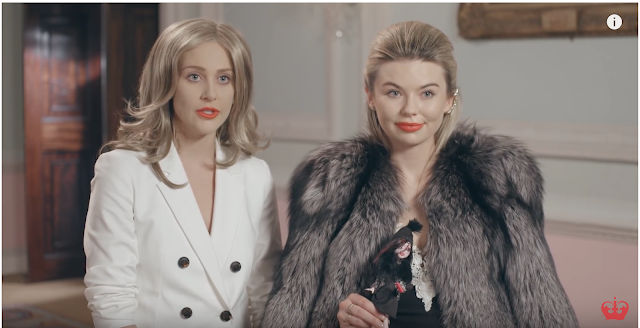
Description of this video:
- Starts with an introduction to the challenge
- “Compete to recreate each other’s signature looks”
- Character Rosie (the character whose style they’re recreating) is introduced
- Then all characters give their opinion on how the challenge is going to go
- They then go into Rosie's wardrobe - have a bit of a giggle and messing around with the clothes
- Finally judged by Rosie herself and Mark Francis (who is present through all the challenges)
- Judged to see who fits Rosie’s style best


“DIY Mens Clothes To Instagram Baddie” Nava Rose

Shows finished product and how to style it.
Repeats this for 2 more items.

The contestants will be played a series of funny clips - their objective is to try not to laugh.
They will start the round with 10 points - every time they laugh, they lose a point.
The Whisper Challenge:

The contestants wear noise cancelling headphones. The presenter says a phrase to them. They have to write down what they thought they heard. The person with the closest answer gets the point.
The 5 Second Challenge:

1. A Style Swap Show
Inspired by the Made In Chelsea Youtube Channel where several characters aim to achieve each other's look.

- Starts with an introduction to the challenge
- “Compete to recreate each other’s signature looks”
- Character Rosie (the character whose style they’re recreating) is introduced
- Then all characters give their opinion on how the challenge is going to go
- They then go into Rosie's wardrobe - have a bit of a giggle and messing around with the clothes
- Finally judged by Rosie herself and Mark Francis (who is present through all the challenges)
- Judged to see who fits Rosie’s style best
How this could be used as an idea:
This could be used as either the whole premise to a live studio show or one segment.
Contestants who all believe they have a unique style will compete to see who can pull off each other's style the best. The format of having 3 contestants works well - one judges how the other two pull off their style.
They will all bring their favourite items of clothing from home & some pieces to throw the other contestants off. 3 small bedroom / dressing room sets will be made - this will act as their wardrobe. They will take it in turns to dig through each other's 'wardrobes' two people at a time to piece together the best outfit. The third contestant will then judge which of the other two has matched their style best. This will be repeated so that each contestant judges how well the other two have matched their style.
Types of possible contestant:
- small fashion bloggers
- fashion or design students
- general public with interest in fashion
Pros of this idea:
- fun
- get a glimpse into fashion whilst being entertained
Cons of this idea:
- would the contestants need to know each other? Otherwise a bit strange to have a stranger going through your wardrobe and trying to dress like you when they don't even know you. Reason it works on Made In Chelsea is that all characters know each other.
- Could get very repetitive - maybe just two people could try and swap into each other's style and a third person acts as a judge / presenter
- Probably more of a segment than a whole show
As this sounded like more of a segment than an entire show, I decided to have a look into other fashion based videos on Youtube. I like the idea of bringing things that are popular on Youtube over onto TV as there is an abundance of content that is missed by people who don't explore Youtube regularly.
'I Dressed Like It Was 1967' Safiya Nygaard

This video explores the fashion that existed in the 1960's.
Context is given by talking about the history surrounding the era.
Different fashion icons of the era were also mentioned - with her trying to imitate some of their outfits.
How this could be used as an idea:
There could be a segment called "Style Through The Ages" where a presenter / reporter talks about fashion of a certain era. They could then suggest ways of dressing which allow you to imitate that era - and also suggest where you can get this sort of clothing from nowadays.
'Inside Kaia Gerber's Whirlwind First Fashion Week' Vogue
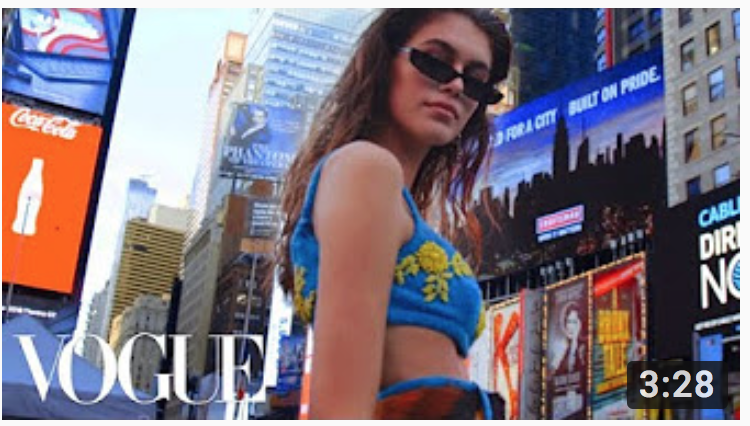
This video follows model Kaia Gerber to first fashion week event.
Lots of shots of her walking around NY interspersed with clips of her walking on the runway and clips of her talking.
Lots of different camera styles (some old looking clips with some modern sharp images).
How this could be used as an idea:
Could do something similar with presenter going to a fashion event for a VT.
Could explore the topic of fashion week.

Starts by introducing the video.
Shows the process of DIYing the clothes - shows what you need and how to change it into the final product.Shows finished product and how to style it.
Repeats this for 2 more items.
How this could be used as an idea:
Have a segment where the presenters show you how to transform an item found in a charity shop into something trendy.
2. Youtube Challenge
My second idea was a little weaker as I knew I didn't really want to propose the idea of a game show but this is the only format that this would work as.
I liked the idea of bringing some popular challenges Youtubers do on their channels into a game show format.
The contestants should be people who do not really watch youtube - so the challenges are completely new to them.
The challenges could include:
The Try Not To Laugh Challenge:

The contestants will be played a series of funny clips - their objective is to try not to laugh.
They will start the round with 10 points - every time they laugh, they lose a point.
The Whisper Challenge:

The contestants wear noise cancelling headphones. The presenter says a phrase to them. They have to write down what they thought they heard. The person with the closest answer gets the point.
The 5 Second Challenge:

The contestants have to name / do things that the presenter sets out in 5 seconds. e.g. They might have to name 3 types of dog in 5 seconds.
There will be different rounds with a couple of different challenges each. Each round a contestant will be eliminated until there are two competing head to head in the final round.
Pros of this idea:
- fun and new
- brings youtube over onto TV
Cons of this idea:
- already a lot of game shows, so this could just get lost in the mix
- a lot of the challenges existed before youtube, so could have already been used in TV game shows.
I will discuss these ideas with my partner Melissa and we will decide which idea (out of hers and mine) we will develop later for the pitch.
Subscribe to:
Posts (Atom)