Exploring sequencing and actuality:
- documentaries have to be researched, meticulously planned, scripted and set up
- sequence for documentaries are directed - based on research - represent reality - artistic representation of reality
- close ups are key
- make sequences interesting, creative, relevant and properly set up for light and sound
- gaining trust with 'real people' is key - built up during pre production process
- research highlight potential actuality and relevant sequences - help to tell story in pictures
- talk through plans prior to shoot
Youtube video on sequencing
- 3 close ups for every 1 wide shots
- hold each shot for around 10 seconds
- shoot an action + reaction
- compress time
- peak moments
- get good coverage
- get as many options as possible from a variety of angles which will cut together for continuity
- shoot to edit
- always get cutaways
- get GVs
- framing / composition
- ensure continuity in the mise en scene
- match action edits
- actuality is a type of documentary filming - captures events - realism
- responding to action
Actuality shooting strategies:
- letting the subject enter and leave the frame
- film plenty of reaction shots
- film cutaways, establishing shots and non sync wide shots
- always get GVs/ cutaways
- only shoot what you need
- always get buzz track / wild track
Reflexivity:
- technique of exposing the filmmaking process - distancing itself from the personal authorship in making documentaries
Self reflexivity:
- exposes not only the process of making a film, but also the authors' own views and the journey they themselves make.
Screening - Aileen Wuornos
What questions were posed?
- death penalty
- mental health
- does death penalty prevent / punish in right way / reduce crime?
- murder or self defence?
Characters:
- Aileen, Nick Broomfield, interview subjects
Self reflexivity:
- showing him put the mic on her - avoiding accusations in court again
Interviews:
- done within the narrative
Sequences:
- archive news footage
- POV shots
- driving scenes
Actuality:
- build up to her execution

Friday, 24 March 2017

Thursday, 23 March 2017
COMMISSIONS UNIT: Research - Hayley - BBC Three Documentary
As well as looking at Blackfish, I decided to look at the documentary ' Hayley' a 30 minute long BBC Three documentary. I decided to look at this because the target audience is the same as the target audience for our project. Therefore by researching this documentary, I will have more of an idea of how to make our documentary appeal to the target audience required.

- The documentary begins with modern upbeat music - immediately appealing to the young target audience. As well as the upbeat music, pop music is used throughout the documentary. This also appeals to the young target audience as it is current music.
- Very casual way of talking to camera - "I know I got a cracking cleavage..." - this makes the audience immediately engage with the documentary as the presenter is relatable and likeable. It is important to have a likeable presenter so that the audience engages with the subject matter.
- Bright colours - the bright colours add to the upbeat / fun nature of the documentary - helps to appeal to the young target audience.
- Sequences in the gym and sequences doing makeup - keeps with the conventions of a documentary whilst still appealing to the young target audience.
- Presenting facts and figures - although this isn't the most interesting thing, it is made interesting by the likeable / relatable presenter.
How Has This Influenced Our Documentary?
- The documentary is quite fast paced in order to appeal to the young target audience. This fast pace is created by the upbeat music, and the presenters short pieces to camera. In order to appeal to a young target audience, we should consider the pace of our documentary. We shouldn't take too long to get into the subject matter - Hayley dives straight into the topic of the documentary - we should do the same.
- The presenter is likeable so the audience are able to relate to her. We need to ensure our presenter (Alex) has a likeable personality so that the audience immediately related to them and wants to sympathise with what he is presenting.
- The sequences merge flawlessly between the segments. The sequences aren't just random, they are to do with the subjects she is talking about. E.g. when taking about young people going to gyms, it shows her at the gym running on a treadmill. When she is talking about cosmetic procedures, it shows the process of marking up the body and outlining what needs to be adjusted. Therefore we need to make the sequences in our documentary fit with what the presenter is talking about.


- All the interviews are introduced with a voiceover and shows the interview subjects walking into the location. We will use a similar technique to introduce our interviewees.

- The documentary begins with modern upbeat music - immediately appealing to the young target audience. As well as the upbeat music, pop music is used throughout the documentary. This also appeals to the young target audience as it is current music.
- Very casual way of talking to camera - "I know I got a cracking cleavage..." - this makes the audience immediately engage with the documentary as the presenter is relatable and likeable. It is important to have a likeable presenter so that the audience engages with the subject matter.
- Bright colours - the bright colours add to the upbeat / fun nature of the documentary - helps to appeal to the young target audience.
- Sequences in the gym and sequences doing makeup - keeps with the conventions of a documentary whilst still appealing to the young target audience.
- Presenting facts and figures - although this isn't the most interesting thing, it is made interesting by the likeable / relatable presenter.
How Has This Influenced Our Documentary?
- The documentary is quite fast paced in order to appeal to the young target audience. This fast pace is created by the upbeat music, and the presenters short pieces to camera. In order to appeal to a young target audience, we should consider the pace of our documentary. We shouldn't take too long to get into the subject matter - Hayley dives straight into the topic of the documentary - we should do the same.
- The presenter is likeable so the audience are able to relate to her. We need to ensure our presenter (Alex) has a likeable personality so that the audience immediately related to them and wants to sympathise with what he is presenting.
- The sequences merge flawlessly between the segments. The sequences aren't just random, they are to do with the subjects she is talking about. E.g. when taking about young people going to gyms, it shows her at the gym running on a treadmill. When she is talking about cosmetic procedures, it shows the process of marking up the body and outlining what needs to be adjusted. Therefore we need to make the sequences in our documentary fit with what the presenter is talking about.


Wednesday, 22 March 2017
COMMISSIONS UNIT: (Pre Production) Pitching Our Idea
After our ideas support meetings with Zoe, we had to come up with the pitch for our documentary.
This involved:
- showing locations
- showing characters and character profiles
- coming up with the style / narrative structure
We came up with a presentation for this:

We all split up the work for the pitch. We individually wrote the character profiles. I wrote the character profile for the insurance broker:

This involved:
- showing locations
- showing characters and character profiles
- coming up with the style / narrative structure
We came up with a presentation for this:

We all split up the work for the pitch. We individually wrote the character profiles. I wrote the character profile for the insurance broker:

Alex wrote the character profile for himself and his dad, Sonia wrote the character profile for her driving instructor and Jason wrote the character profile for his driving instructor.
The pitch was quite well received. Zoe and Helen warned us that we shouldn't focus on the financial side of things too much unless it affects us in an extremely major way - otherwise the audience will not sympathise with the subject at all. This means that we may need to adjust the tone slightly. We may also need to get rid of the idea of Alex doing a challenge as the audience will not be sympathetic enough to him - he can still travel without a car.
Tuesday, 21 March 2017
COMMISSIONS UNIT: Research - Blackfish
I decided to research Blackfish due to it being a well received documentary.

The structure of Blackfish is evidently very complex. It is made up of interviews with former Sea World trainers, experts, archive footage, montages etc.
The documentary begins with some ominous sounding music fading in. At the same time the screen fades from black to a deep blue colour (like the sea). Titles appear and display the date 'February 24, 2010 SeaWorld Orlando' - it then becomes apparent that this is the date that the trainer Dawn Brancheau was killed by the killer whale Tilikum. This is revealed through a recorded phone call to a Fire Rescue department claiming that a trainer was in the water with a whale that no one is supposed to be in the water with. This is followed up by a phone call to the sherif's office claiming that a whale had eaten one of the trainers. These phone calls introduce the subject of the documentary - the dangers of working with whales and why whales act in such a way to the people that care for them. Archive footage of the trainer with the whale plays during these phone calls (as well as various titles).
To contrast to this sombre opening, after the title of the documentary appears, the happy / upbeat trailer for SeaWorld plays. This contrasts to the 'real events' which are actually taking place in SeaWorld. This paints SeaWorld as the enemy and establishes the theme of this documentary - uncovering the lies told by SeaWorld and their treatment of the whales which results in them acting in such a way to trainers.
This is followed by the introduction of the interview subjects of the documentary. All of the interview subjects (apart from one or two experts) are introduced very early on in the documentary. They begin to talk about their experiences at SeaWorld whilst archive footage of their training plays. They all talk about what made them want to be a trainer and what their training experiences were like.
The whales are painted as the victim in this documentary - they only killed the trainers due to their treatment and frustration at being in captivation.
Further in the documentary, experts talk about the capture of these whales from the sea and the unfair treatment at SeaWorld. One expert claims that if you stay out of proximity with the whales then you won't get killed - demonstrating that the deaths of the trainers can't really be blamed on the whales - this is the way that killer whales behave when they're frustrated.
Archive footage shows the capture of the whales whilst the people involved in the capture talked about their experiences. They talk about the brutality of capturing these whales - how some die as a result of this - how the adults tried to protect their young. One of the people involved in these hunts, talks about his regret at being involved with these hunts. This again helps to paint SeaWorld as the enemy.
The documentary continues to show the different events at SeaWorld, more interviews with trainers and archive footage. There is a lot of actuality footage which helps to demonstrate the message that the documentary is conveying - the aggression / frustration of the killer whales caused by being captive at SeaWorld. This actuality footage adds a lot of weight to the argument due to it being real / natural behaviour which supports their message. The documentary mainly explores the death of the trainers and why this was allowed to happen. It also exposes SeaWorld and the lies they tell - e.g. they claim that killer whales only live until about 25-30 years old (and that this is a lot longer than in the wild because they can provide veterinary care) but experts expose this lie by showing the killer whales who live in their natural habitat live a lot longer / equivalent to human life spans.
The documentary finishes with the message that SeaWorld should free the killer whales who are healthy enough to survive in the wild or release them to open ocean pens. This should be done for the health of the whales and also for the safety of the trainers to prevent any more deaths occurring. The closing images shows the former trainers going out to watch whales in the wild - where they should be.
How Has This Influenced Our Documentary
- Blackfish had a clear message to portray - that keeping whales in captivity is not only cruel to the whales but also dangerous for the trainers. The documentary also clearly showed SeaWorld as the enemy due to their treatment of these whales. This has influenced our documentary as it shows the importance of having a clear and focused angle - this makes the audience support who you tell them to support. For our documentary, we would like the audience to support the young drivers by realising how unfair insurance prices are for them and how ridiculously expensive driving is. This means we need to paint teenagers in a positive light and the insurance industry in a negative light.
- Blackfish didn't have a presenter. Instead, the narrative was told through archive footage and interviews with former trainers and experts. A presenter really wasn't needed because their angle was clear and the audience could tell just from the interviews who's side to take. This has influenced our documentary as we think we will need a presenter in order to make our documentary more clear. Although we have a clear angle, we feel that a presenter would be better to reinforce our message. We also have a lot less interviews than Blackfish and therefore a presenter feels necessary in order to bridge any gaps.
- Blackfish used a lot of archive footage to demonstrate their point as well as entertain and interest the audience. We hope to include archive footage of old cars in order to demonstrate the differences between driving about 30 years ago compared to driving today.
- The main thing this documentary has shown me is that it is important to have a clear and focused angle in order to make the audience support the ideas that you present. Without a clear and focused angle, the audience will become confused as to which side they are supposed to take.

The structure of Blackfish is evidently very complex. It is made up of interviews with former Sea World trainers, experts, archive footage, montages etc.
The documentary begins with some ominous sounding music fading in. At the same time the screen fades from black to a deep blue colour (like the sea). Titles appear and display the date 'February 24, 2010 SeaWorld Orlando' - it then becomes apparent that this is the date that the trainer Dawn Brancheau was killed by the killer whale Tilikum. This is revealed through a recorded phone call to a Fire Rescue department claiming that a trainer was in the water with a whale that no one is supposed to be in the water with. This is followed up by a phone call to the sherif's office claiming that a whale had eaten one of the trainers. These phone calls introduce the subject of the documentary - the dangers of working with whales and why whales act in such a way to the people that care for them. Archive footage of the trainer with the whale plays during these phone calls (as well as various titles).
To contrast to this sombre opening, after the title of the documentary appears, the happy / upbeat trailer for SeaWorld plays. This contrasts to the 'real events' which are actually taking place in SeaWorld. This paints SeaWorld as the enemy and establishes the theme of this documentary - uncovering the lies told by SeaWorld and their treatment of the whales which results in them acting in such a way to trainers.
This is followed by the introduction of the interview subjects of the documentary. All of the interview subjects (apart from one or two experts) are introduced very early on in the documentary. They begin to talk about their experiences at SeaWorld whilst archive footage of their training plays. They all talk about what made them want to be a trainer and what their training experiences were like.
The whales are painted as the victim in this documentary - they only killed the trainers due to their treatment and frustration at being in captivation.
Further in the documentary, experts talk about the capture of these whales from the sea and the unfair treatment at SeaWorld. One expert claims that if you stay out of proximity with the whales then you won't get killed - demonstrating that the deaths of the trainers can't really be blamed on the whales - this is the way that killer whales behave when they're frustrated.
Archive footage shows the capture of the whales whilst the people involved in the capture talked about their experiences. They talk about the brutality of capturing these whales - how some die as a result of this - how the adults tried to protect their young. One of the people involved in these hunts, talks about his regret at being involved with these hunts. This again helps to paint SeaWorld as the enemy.
The documentary continues to show the different events at SeaWorld, more interviews with trainers and archive footage. There is a lot of actuality footage which helps to demonstrate the message that the documentary is conveying - the aggression / frustration of the killer whales caused by being captive at SeaWorld. This actuality footage adds a lot of weight to the argument due to it being real / natural behaviour which supports their message. The documentary mainly explores the death of the trainers and why this was allowed to happen. It also exposes SeaWorld and the lies they tell - e.g. they claim that killer whales only live until about 25-30 years old (and that this is a lot longer than in the wild because they can provide veterinary care) but experts expose this lie by showing the killer whales who live in their natural habitat live a lot longer / equivalent to human life spans.
The documentary finishes with the message that SeaWorld should free the killer whales who are healthy enough to survive in the wild or release them to open ocean pens. This should be done for the health of the whales and also for the safety of the trainers to prevent any more deaths occurring. The closing images shows the former trainers going out to watch whales in the wild - where they should be.
How Has This Influenced Our Documentary
- Blackfish had a clear message to portray - that keeping whales in captivity is not only cruel to the whales but also dangerous for the trainers. The documentary also clearly showed SeaWorld as the enemy due to their treatment of these whales. This has influenced our documentary as it shows the importance of having a clear and focused angle - this makes the audience support who you tell them to support. For our documentary, we would like the audience to support the young drivers by realising how unfair insurance prices are for them and how ridiculously expensive driving is. This means we need to paint teenagers in a positive light and the insurance industry in a negative light.
- Blackfish didn't have a presenter. Instead, the narrative was told through archive footage and interviews with former trainers and experts. A presenter really wasn't needed because their angle was clear and the audience could tell just from the interviews who's side to take. This has influenced our documentary as we think we will need a presenter in order to make our documentary more clear. Although we have a clear angle, we feel that a presenter would be better to reinforce our message. We also have a lot less interviews than Blackfish and therefore a presenter feels necessary in order to bridge any gaps.
- Blackfish used a lot of archive footage to demonstrate their point as well as entertain and interest the audience. We hope to include archive footage of old cars in order to demonstrate the differences between driving about 30 years ago compared to driving today.
- The main thing this documentary has shown me is that it is important to have a clear and focused angle in order to make the audience support the ideas that you present. Without a clear and focused angle, the audience will become confused as to which side they are supposed to take.
Monday, 20 March 2017
COMMISSIONS UNIT: (Pre Production) Contacting People / Casting
For our documentary, we decided we would need a variety of people to interview.
We needed experts - people who would explain whether young drivers are more dangerous than older drivers and why young drivers pay so much for their insurance then back this up with knowledge from their industry or with other facts and statistics.
Potential experts:
- someone from the AA
- a police officer
- driving instructor
- driving examiner
- someone from an insurance company
We also need to interview people who are affected by the cost of driving.
- learner drivers
- someone who has recently passed their test and is facing the problem of affording insurance
- someone who can't afford to drive - what other methods do they use?
- someone who has passed their test but doesn't have a car
- a young driver who can afford to drive - how? Is it parent's money? Do they have a job?
We also wanted to compare the differences between driving 20 / 30 years ago and driving today. More expensive? Cheaper?
We also wanted to put our presenter / Alex through the challenge of going without his car - how will he get around? Is it possible? Or is driving a necessity?
As a group we split up our roles and got in contact with different people. We all contacted our driving instructors to see if they would have time to spare to be in our documentary.
Sonia's driving instructor responded saying that she would be willing to be in the documentary.
Jason's driving instructor also responded saying that she would also be willing.
This gave us 2 options for driving instructors.
As an insurance broker, my mum also agreed to be in the documentary. This gave us an expert to discuss the insurance premiums for young drivers.
Alex's dad Jim also agreed to be in the documentary to talk about the differences in driving.
Alex is also happy to be our presenter
Friday, 17 March 2017
COMMISSIONS UNIT: Interview Workshop
Earlier this week we had an interview workshop. We had to prepare some questions before the workshop to ask during the interview. I ended up being the interview subject for our group, whilst Jason and Alex asked me questions. We had to make sure the answers were self contained. This meant asking questions beginning with phrases such as "Can you describe..." and "Can you tell me..."
Today we were going to review the interview footage. Unfortunately the footage for our group was lost - this could be due to the afternoon group maybe accidentally formatting the card we had worked on. This is disappointing but at least we attended the workshop and have had a bit of practice and experience with interviews.

Today we were going to review the interview footage. Unfortunately the footage for our group was lost - this could be due to the afternoon group maybe accidentally formatting the card we had worked on. This is disappointing but at least we attended the workshop and have had a bit of practice and experience with interviews.

COMMISSIONS UNIT: (Pre Production) Developing / Researching Our Idea
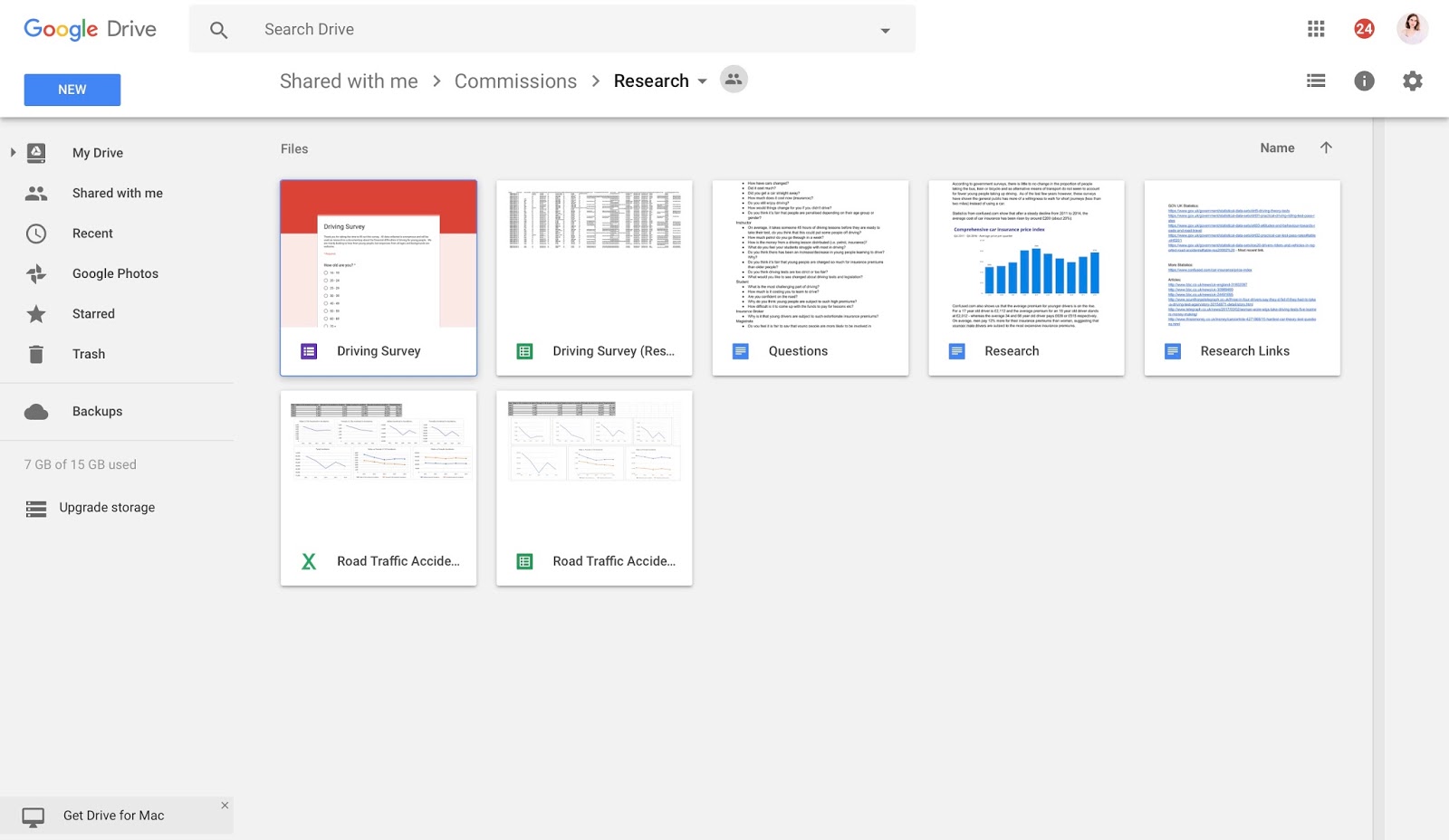
Once we had decided on the idea of doing our documentary on young drivers, we all decided to do some research on the subject. We decided to use google docs to do all of our work so that we could all contribute to the files and keep all of our research in the same place.

The main things we found were that:
- insurance for young drivers under the age of 25 is the most expensive
- the main reason for this higher insurance is the statistics that show young drivers are more likely to be involved in accidents
- AA research shows that 1 in 8 British Drivers are aged 25 and under - and 1/4 of all drivers involved in serious traffic collisions belong to this age group
- young drivers haven't had a chance to build up any no claims bonus
- males tend to be more dangerous than females (especially young males)
- overall accidents have gone down (but young males still cause the most)
In order to back up our research, we also created a driving survey. We all contributed ideas to the survey, however, it was Alex who actually created the survey and came up with the majority of the questions and format. We all shared the survey with our friends and family and also asked them to pass it on. This gave us a large sample from a variety of ages and backgrounds.
Overall, we received 144 responses. This enabled us to see other people's attitudes towards young drivers and whether this follows what the facts and statistics show.


The survey showed that:
- 64% people thought black boxes were a good idea
- 48% people are completely reliant on their cars and can't do their day to day activities without them
- 56% people thought young drivers should pay the same for their car insurance as older driver (with 34% believing they should pay higher and 10% believing they should pay lower).
- 56% people thought young drivers are just as dangerous as old drivers (34% thought they were more dangerous, and 10% thought they were less dangerous)
From our survey it is interesting to see that people generally think young drivers are being unfairly punished. The majority of people thought they should pay the same for their insurance as older driver because they're equally dangerous. It is also interesting how a large proportion believed young drivers were more dangerous and should therefore pay more. Some participants expanded on their answers which provides their answers with more weight. We may use some of these statistics in our documentary.
We presented our developed ideas to Zoe in our next ideas support group. She gave us some more ideas to include in our documentary:
- crash for cash? - how is this affecting insurance?
- has insurance increased or has it always been this way?
- do we sympathise with Alex enough if we are to go with the idea of taking away his car and seeing if he can still get around?
- do we sympathise with the subject enough? - so what if you can't drive? take a bus?
The main things we found were that:
- insurance for young drivers under the age of 25 is the most expensive
- the main reason for this higher insurance is the statistics that show young drivers are more likely to be involved in accidents
- AA research shows that 1 in 8 British Drivers are aged 25 and under - and 1/4 of all drivers involved in serious traffic collisions belong to this age group
- young drivers haven't had a chance to build up any no claims bonus
- males tend to be more dangerous than females (especially young males)
- overall accidents have gone down (but young males still cause the most)
In order to back up our research, we also created a driving survey. We all contributed ideas to the survey, however, it was Alex who actually created the survey and came up with the majority of the questions and format. We all shared the survey with our friends and family and also asked them to pass it on. This gave us a large sample from a variety of ages and backgrounds.
Overall, we received 144 responses. This enabled us to see other people's attitudes towards young drivers and whether this follows what the facts and statistics show.


The survey showed that:
- 64% people thought black boxes were a good idea
- 48% people are completely reliant on their cars and can't do their day to day activities without them
- 56% people thought young drivers should pay the same for their car insurance as older driver (with 34% believing they should pay higher and 10% believing they should pay lower).
- 56% people thought young drivers are just as dangerous as old drivers (34% thought they were more dangerous, and 10% thought they were less dangerous)
From our survey it is interesting to see that people generally think young drivers are being unfairly punished. The majority of people thought they should pay the same for their insurance as older driver because they're equally dangerous. It is also interesting how a large proportion believed young drivers were more dangerous and should therefore pay more. Some participants expanded on their answers which provides their answers with more weight. We may use some of these statistics in our documentary.
We presented our developed ideas to Zoe in our next ideas support group. She gave us some more ideas to include in our documentary:
- crash for cash? - how is this affecting insurance?
- has insurance increased or has it always been this way?
- do we sympathise with Alex enough if we are to go with the idea of taking away his car and seeing if he can still get around?
- do we sympathise with the subject enough? - so what if you can't drive? take a bus?
Subscribe to:
Posts (Atom)